音樂如何成為帝國與文化傳遞的聲音
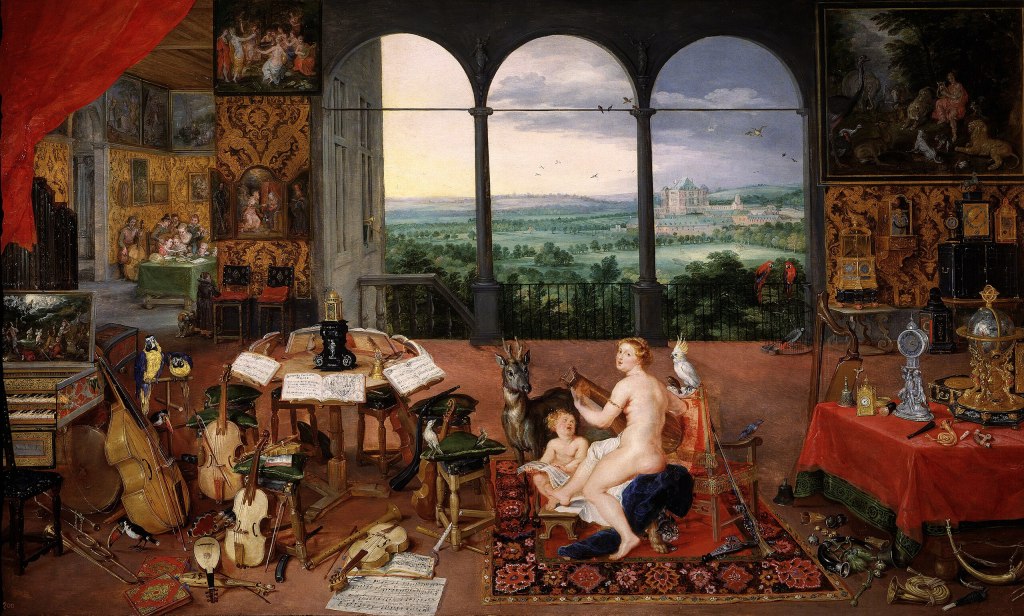
Program 節目
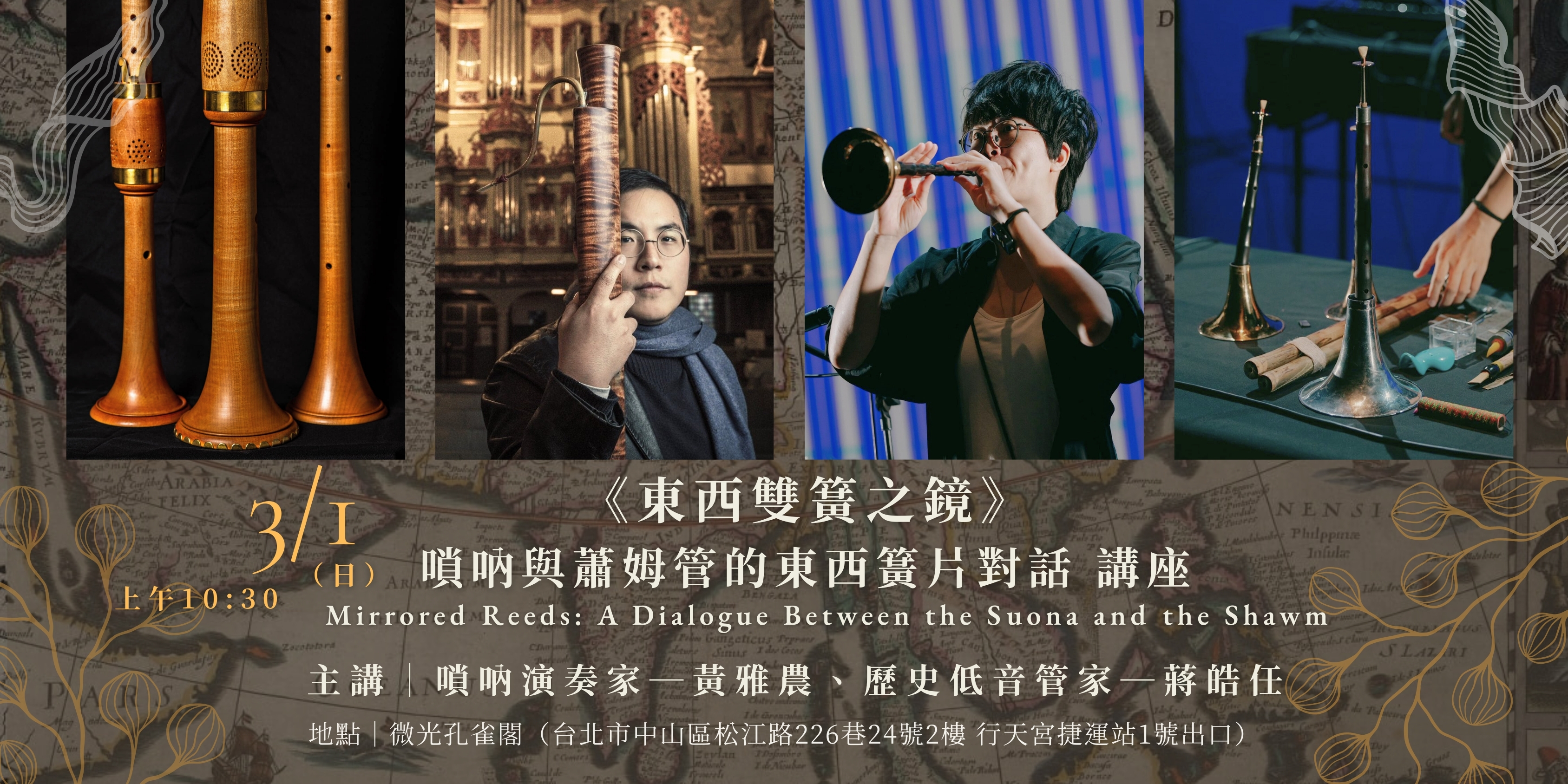
《東西雙簧之鏡》 嗩吶與蕭姆管的東西簧片對話 . 講座
Mirrored Reeds: A Dialogue Between the Suona and the Shawm
講者:黃雅農(嗩吶演奏家)、蔣皓任(歷史低音管演奏家)
時間: 3/1 (日)10:30
地點:微光孔雀閣 (臺北市中山區松江路226巷24號2樓)
內容:
三月起,微光國際古樂節將從“聽覺”和“聲音”的角度切入大航海時代與西班牙時期的台灣。
不僅限於西班牙等歐洲古樂,更會從台灣與亞洲本地的聲音視角切入,探索明末清初的台灣古樂。
十七世紀的北台灣,當西班牙人在雞籠(今基隆)建造聖薩爾瓦多城時,山海之間早已有活躍的漢人移民聚落。在宗教儀式與社會生活中,東方的嗩吶(Suona)與西方的蕭姆管(Shawm)幾乎同時響起,兩種皆以簧片振動發聲的傳統樂器,在高亢音色與穿透力上驚人地相似,卻各自擁有了截然不同、卻同樣深厚的文化背景。
本場講座將由知名嗩吶與世界雙簧片樂器演奏家、曾踏上絲路尋根之旅的世界音樂旅人-黃雅農 主講,並與微光古樂集團長、歷史低音管演奏家—蔣皓任共同對談,介紹交界於古絲路的東西雙簧樂器。
兩位講者將分別從嗩吶與西方雙簧片樂器的第一線演奏與研究經驗出發,循著聲學結構、樂器歷史與演奏實踐的脈絡,帶領觀眾進入一場從伊斯蘭國家,跨越歐亞大陸傳遍世界的「雙簧片對話」。
在西班牙的文藝復興與早期巴洛克時期,蕭姆管(Shawm)如何成為宗教儀式、城市典禮與權力展演中不可或缺的「官方之聲」,甚至居高臨下的在城塔上吹奏,並與文藝復興低音管(Dulcian)一同構築出響徹廣場與教堂空間的文藝復興音樂。
而在亞洲社會中,嗩吶又如何深深嵌入人生禮儀、祭儀與喜慶場合,成為情感、秩序與集體記憶的聲音象徵。這些看似音色相近、卻身世迥異的雙簧樂器,是否曾在大航海時代的海路網絡中,於福爾摩莎的某個港口短暫交會?
這是一場關於東西方樂器比較的講座,也是一段透過嗩吶、蕭姆管與歷史低音管,重新聆聽十七世紀大航海時代聲音世界的歷史旅程。在山海與港口之間,人類如何用雙簧片,為信仰、儀式與生活發聲。
最後,這場講座也將回到「微光西班牙古樂節」的核心:並不意在紀念或歌頌殖民本身,而是透過這段無法忽視的歷史,重新回望並理解我們自身所處的文化和經過。
藉由聆聽十七世紀響徹海港與儀式現場的雙簧之聲,我們得以重新思考台灣與亞洲在全球古樂版圖中的位置,也重新認識那些來自本地與亞洲的古老雙簧聲音,如何在今日被理解、被聽見,並被賦予新的歷史意義。
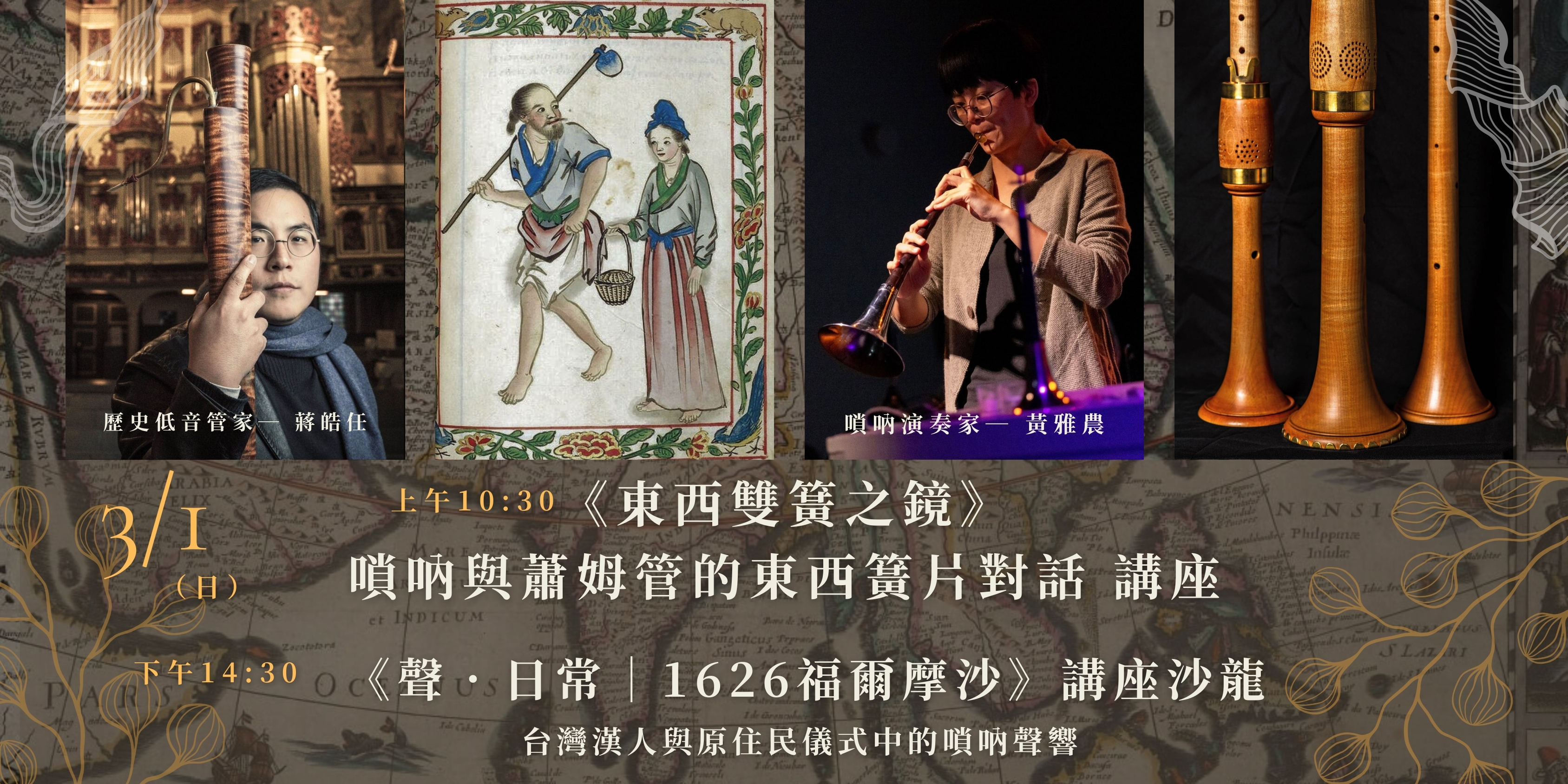
演奏者:黃雅農(嗩吶演奏家)
時間: 3/1 (日)14:30
地點:微光孔雀閣 (臺北市中山區松江路226巷24號2樓)
內容:
《聲.日常:1626 福爾摩沙》是一場結合講座與音樂演出的聲音旅程,嘗試以「聽覺」作為理解歷史的入口。當十七世紀的北台灣逐漸成為多方文化往來的節點,除了官方文獻與歷史事件之外,更大量存在的是未曾被記錄下來的日常聲音:來自田野、街道、市集與民間儀式的聲響。
1. 【晨曦・水田與山徑】
2. 【午間・市集與交易】
3. 【黃昏・家屋與私語】
4. 【深夜・夢迴與死亡】
本場活動由嗩吶與世界音樂演奏家-黃雅農策劃,演出內容以嗩吶與台灣本地的傳統古樂器-鴨母笛為核心。
黃雅農將帶來多種不同形制與音色的嗩吶,呈現其在漢人社會中於祭儀、喜慶與公共空間所扮演的角色;同時,也將演奏與介紹台灣獨有、極為罕見的傳統吹管樂器──鴨母笛,讓這件逐漸消失於現代生活中的樂器,再次曾經發響時的興榮時代。
整場講座音樂會如同一段時間推移的聲音地圖,從清晨的水田與山徑出發,進入午間熱鬧的市集與交易空間,隨著黃昏走入家屋與私密生活,最終在深夜觸及夢境、死亡與信仰的層次。將用跨界與傳統文獻上的史料將台灣百年的傳統音樂帶入大航海時代的舞台,也凸顯台灣在17世紀的生活節奏、社會秩序與情感記憶。
《聲.日常:1626 福爾摩沙》透過聲音的想像與實踐,邀請觀眾重新思考:什麼是屬於台灣這座島嶼的古老聲音和古樂?又該如何從自身文化出發,重新理解與復興在地台灣歷史音樂的傳統。
About the Program
A Day in Formosa, 1626 — Sound & Everyday Life is a lecture-recital that invites audiences to enter history through listening. In seventeenth-century northern Taiwan, as the island gradually became a crossroads of maritime exchange and cultural encounter, history was not only shaped by official records and major events, but also by countless everyday sounds that were never written down — sounds from fields, streets, marketplaces, households, and ritual spaces.
Rather than reconstructing history through documents alone, this program approaches the past through its soundscape, asking what daily life may have sounded like for the people who lived, worked, traded, celebrated, and mourned on this island four centuries ago.
The performance unfolds as a temporal sound map across one imagined day:
Morning — Fields, Waterways, and Mountain Paths
Midday — Markets and Exchange
Dusk — Homes and Private Voices
Night — Dreams, Death, and the Sacred

講者/演奏者:Alban Couëffé 阿樂蹦˙貴妃(國立臺北藝術大學傳統音樂學系兼任助理教授 )
時間:3/7(六)14:30
地點:微光孔雀閣 (臺北市中山區松江路226巷24號2樓)
內容:
東方的琵琶與西方的魯特琴,其淵源皆來自於同一格地區和樂器,那就是在伊斯蘭音樂文化中一種與詩歌、哲學緊密相連撥弦樂器-烏德琴(Oud),可謂世界撥弦樂器的始祖。
自中世紀早期起,烏德琴便活躍於阿拔斯王朝的宮廷之中,被視為能夠展現修辭、時間觀與精神性思考的重要樂器,其音樂實踐與理論,深刻影響了後世對「聲音」的理解方式。
本場講座將由活躍於烏德琴演奏的國立臺北藝術大學傳統音樂學系兼任助理教授─Alban Couëffé 主講與示範。
講座將結合理論講解與實際演奏,帶領觀眾理解烏德琴在人類歷史上的地位,及其如何在安達魯西亞發展出獨特而成熟的音樂風格體系。
隨著伊斯蘭世界與地中海歐洲的長期交流,烏德琴逐步轉化為歐洲古樂的魯特琴,成為文藝復興與早期巴洛克撥弦音樂的核心樂器之一。講座將透過歷史文獻、視覺圖像與音樂實例,梳理這段跨文化轉化的過程,並說明歐洲古樂中許多看似熟悉的聲響,其實源自更早、更廣闊的伊斯蘭文明背景。
作為三月西班牙大使古樂團系列-比維拉琴(Vihuela)來台的重要前導活動,本講座將為觀眾建立一條從伊斯蘭烏德琴出發,通往地中海與歐洲撥弦傳統到21世紀的歷史之路,重新理解歐洲古樂背後所連結的多重文化世界。
About the Program
The oud, deeply connected to poetry and philosophy in the Islamic world, is the shared ancestor of both the Eastern pipaand the Western lute. From the Abbasid courts to al-Andalus, the oud shaped early ideas of sound, time, and musical expression.
Through live performance and historical explanation, Alban Couëffé introduces the oud’s musical system and traces its transformation into the European lute, revealing how many sounds of Renaissance and early Baroque music are rooted in Islamic musical culture.
As a prelude to the vihuela concerts of the Capella de Ministrers series, this lecture invites audiences to hear European early music as part of a wider, interconnected sound world stretching from the Islamic world to the Mediterranean and beyond.

《絲弦之語》 明末琵琶的詩與聲. 蘇筠涵講座沙龍
Silken Strings: The Pipa and Poetic Soundscapes of the Late Ming
演奏者/講者:蘇筠涵(北藝大琵琶助理教授)
時間:3/7(六)19:30
地點:微光孔雀閣 (臺北市中山區松江路226巷24號2樓)
內容:
微光國際古樂節不僅限於西班牙等歐洲古樂,更會從同時代,台灣與亞洲本地的聲音視角切入,探索明末清初的台灣古樂。
《絲弦之語:明末琵琶的詩與聲》 是一場介於研究與演出之間的講座音樂會,嘗試回到明末至清初的歷史節點,重新思考琵琶音樂在當時社會中的位置與聲音美學。
相較於後世留下較為完整譜本的樂種,這一時期的琵琶音樂多散見於戲曲伴奏、合奏譜與文人記錄之中,其聲音樣貌必須透過跨文本的比對與風格推敲,才能逐步浮現。
本場活動由國立臺北藝術大學傳統音樂學系琵琶助理教授─蘇筠涵 擔綱主講與演出。蘇筠涵長期致力於絲弦琵琶的研究與實踐,關注琵琶的歷史發展、歷史音色美學與語境之間的關係。
她將以大量保留明代音樂資訊、並流傳至日本的 《魏氏樂譜》,以及清代 《太古傳宗》 所附 《弦索時劇新譜》 與榮齋 《弦索備考》 等譜集為基礎,進行系統性的譜本考察與風格重構,並演繹 〈桂花曲〉、〈陽關三疊〉、〈閨思〉、〈九連環〉 與 〈海青拿天鵝〉 等作品。
在樂器選擇上,本場演出特別使用絲弦琵琶作為返璞歸真的媒介,如同歐洲的維奧爾琴與巴洛克提琴使用「羊腸弦」。
絲弦所呈現的柔和音質、細膩起伏與內在張力,更貼近明清時期的聲響質地,也使音樂得以回應文人審美中所重視的含蓄、留白與詩意表達,聲音為一種時間的容器。
這場講座音樂會將如同一場東方音樂的「古樂復興」,在理性的史料研究與感性的當代表演之間,重新聆聽古譜所蘊含的聲韻與精神。透過絲弦琵琶,《絲弦之語》邀請觀眾在當代的聽覺中,與明末清初時期的聲響世界再次相遇。
About the Program
This lecture-recital explores the sound world of the late Ming to early Qing period, approaching pipa music through historical research and live performance. Unlike later repertories preserved in complete scores, pipa music of this era survives mainly in theatrical accompaniments, ensemble sources, and literati writings, requiring careful reconstruction through comparative study.
Drawing on important historical sources such as the Wei Family Music Manuscripts and Qing-dynasty xiansuocollections, Su Yun-Han presents a stylistic reimagining of late-Ming pipa music, performing works including Gui Hua Qu, Yang Guan San Die, Gui Si, Jiu Lian Huan, and Haiqing Na Tian’e.
Performed on silk-string pipa, the program highlights a softer, more nuanced sound aesthetic aligned with Ming–Qing literati ideals of restraint, resonance, and poetic expression. Silken Strings invites listeners to encounter an East Asian “early music revival,” where historical inquiry and contemporary performance converge to reanimate a lost sound world.
西班牙大使古樂團來台系列
Capella de Ministers Series
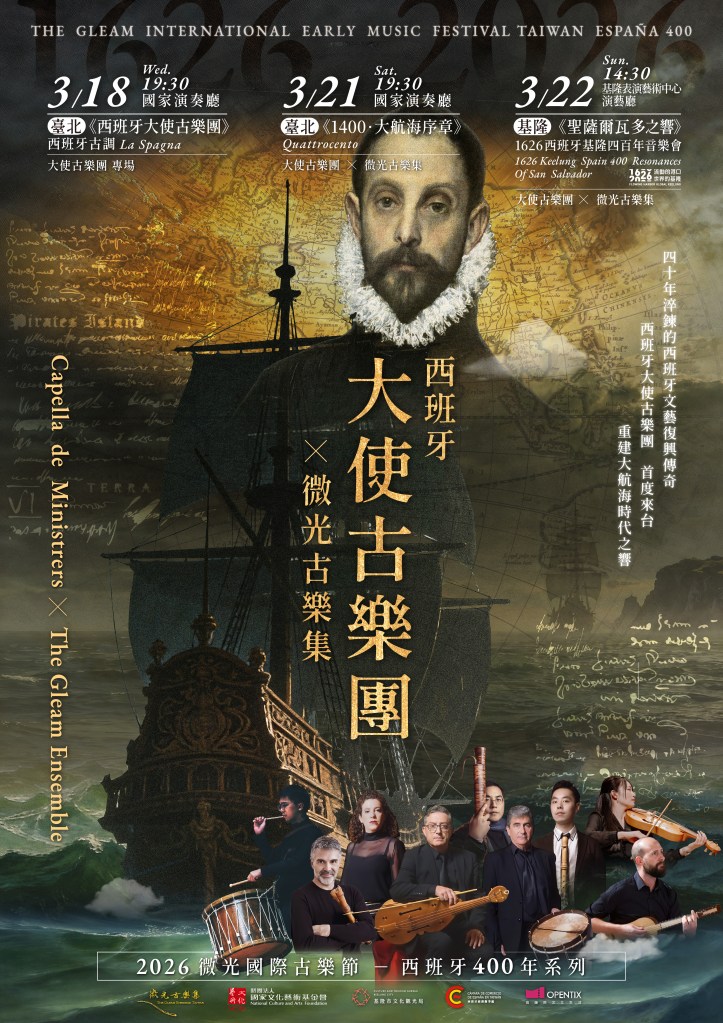
《西班牙大使古樂團-西班牙古調 La Spagna》 音樂會
演出團隊:西班牙大使古樂團 Capella de Ministers
時間:3/18 (三)19:30
地點:臺北國家演奏廳(臺北市中正區中山南路21-1號)
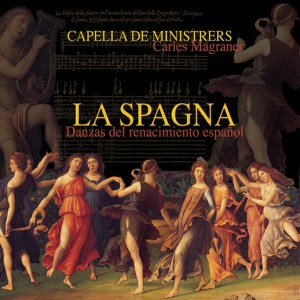
音樂會簡介:
15 世紀中期,葡萄牙率先突破了世界盡頭的框架,隨著鄂圖曼土耳其人掌控陸路,使歐洲首次意識到必須走向海洋,航海探索反而來的更巨額財富,促使歐洲各國紛紛把眼光從陸路轉向了大海,自此揭開海權爭霸的序幕。
新大陸的發現,更讓舊世界的國家為之瘋狂,西班牙、荷蘭東印度公司、英國及法國前仆後繼奔向大海,龐大的土地與利益,衝擊著這個世界也更改了曾經的遊戲規則。
而在這個海上霸權的年代,西班牙建立了可與任何國家匹敵的艦隊航向各大洋。
而音樂,作為宮廷、軍旅與城市生活的一部分,也隨著船隊與貿易航線遠播各地;航海不只拓展了領土,也帶動了文化互融與音樂的跨洋流傳。在這樣的大時代背景之下,西班牙的音樂影響力,從宮廷傳入市鎮、從舞蹈迴旋至宗教與軍旅,
而當時最廣為流傳的流行歌曲〈Spagnoletta 西班牙小調〉,和 15 至 17 世紀文藝復興到早期巴洛克歐洲最具代表性的定旋律—〈La Spagna 西班牙古調〉被廣傳至全歐,為當時歐洲大陸最為重要的音樂遺產之一。
「西班牙古調 La Spagna」是流行於十五、十六、十七世紀從文藝復興到早期巴洛克最有名的「定旋律」(Cantus Firmus),作為文藝復興早期作曲的基礎素材和當時歐陸名作曲家的創作基礎,在舞曲與各種器樂變奏中反覆被使用,並在各個聲部皆會出現,成為五百年前作曲家們的創作基礎,也因此旋律在當時太有名,所以橫跨世代與地域的,幾乎成為文藝復興時期歐洲人的共同音樂語言。
在本場音樂會中,由西班牙最具指標性、致力於西班牙古樂復興的古樂團- 大使古樂團 (Capella de Ministrers) 帶來他們同名專輯《La Spagna》的精選演出。該專輯收錄了多首源自文藝復興時期的器樂舞曲與變奏作品,從Diego Ortiz 到Luis de Milán、Cabezón、Narváez 等西班牙文藝復興偉大作曲家的樂思裡重現這段旋律的多樣生命。
本次演出,微光古樂集將集結大使古樂團,用聲樂和文藝復興古樂器,帶來一場難得的樂器史策展饗宴。
其中最引人注目的,是此次的組合編制非同凡響,大使古樂團將會首次帶來兩種幾乎只存在於歷史文獻與繪畫中,卻影響世界音樂史深遠的關鍵古樂器—弓弦比維拉琴(Vihuela de Arco) 與撥弦比維拉琴(Vihuela de Mano),而它們正是今天提琴、維奧爾琴、吉他、魯特琴的祖先,也是台灣首次有機會現場親眼和親耳見證這些史書中傳奇的古樂器。
About the Program
By the mid-fifteenth century, Portugal was the first to break through the imagined limits of the known world. The immense wealth brought back by maritime exploration prompted European powers to shift their focus from land routes to the seas, ushering in an era of naval rivalry. The discovery of the New World further transformed the global order, drawing Spain, the Netherlands, England, and France into a race for overseas territories and influence. Vast lands and new economic interests reshaped the world and irrevocably altered the rules by which it had long operated.
Within this age of maritime power, Spain forged what became known as the Invincible Armada (Grande y Felicísima Armada), the most formidable naval force of the late sixteenth century. Dispatched by King Philip II in 1588 with the aim of conquering England, the fleet ultimately met with defeat, yet it remains a powerful symbol of Spain’s imperial ambition during the Age of Discovery.
This concert approaches the history of the Age of Exploration through music, centering on “La Spagna”, the most famous cantus firmus of the period. Widely circulated across Europe, La Spagna became one of the most important musical legacies of the Renaissance and early Baroque eras.
From the fifteenth to the seventeenth centuries, La Spagna served as the foundation for countless compositions by major European composers. The melody appears variously in the upper, middle, or bass voices, demonstrating its extraordinary adaptability and symbolic resonance across musical styles and generations.
Celebrating its 38th year, Capella de Ministrers, Spain’s leading ensemble dedicated to the revival of historical Spanish music, presents a program spanning from the Middle Ages to the early Baroque. Through works based on La Spagna, the ensemble reawakens the sounds that once echoed aboard Spanish fleets during the Age of Discovery, offering a vivid musical reflection of an era defined by ambition, exploration, and the pursuit of glory.
🔗 優惠資訊|加入微光古樂之友,即享古樂節大場節目優惠折扣
微光特別提供「微光古樂之友」專屬優惠,加入「微光古樂之友」LINE 直享八折優惠
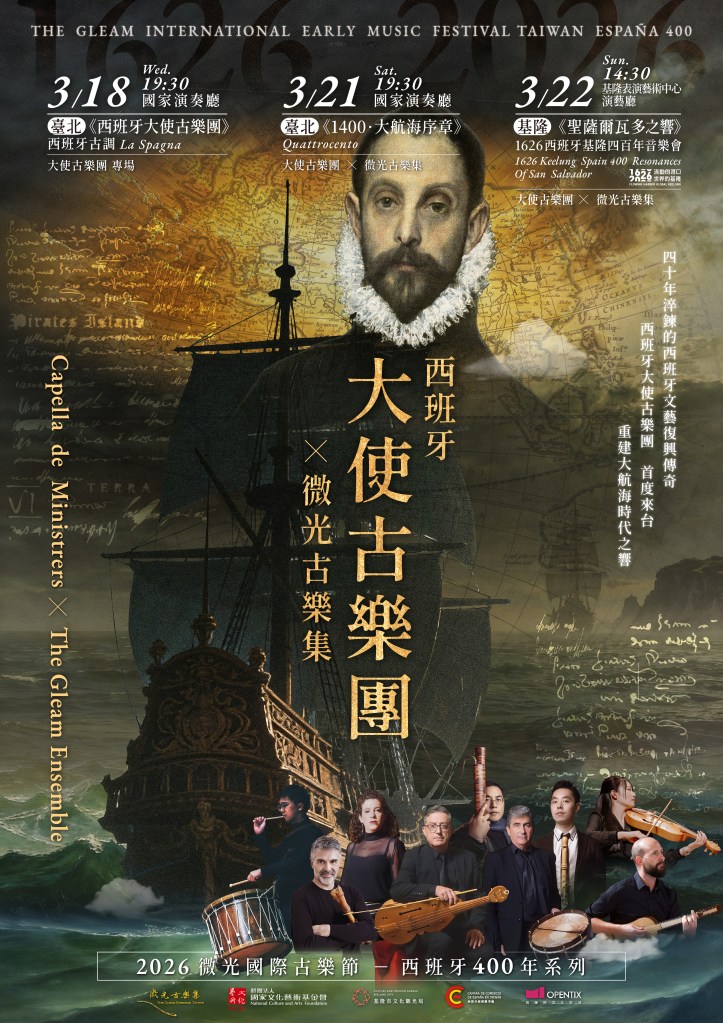
《1400.大航海序章》 音樂會
Quattrocento
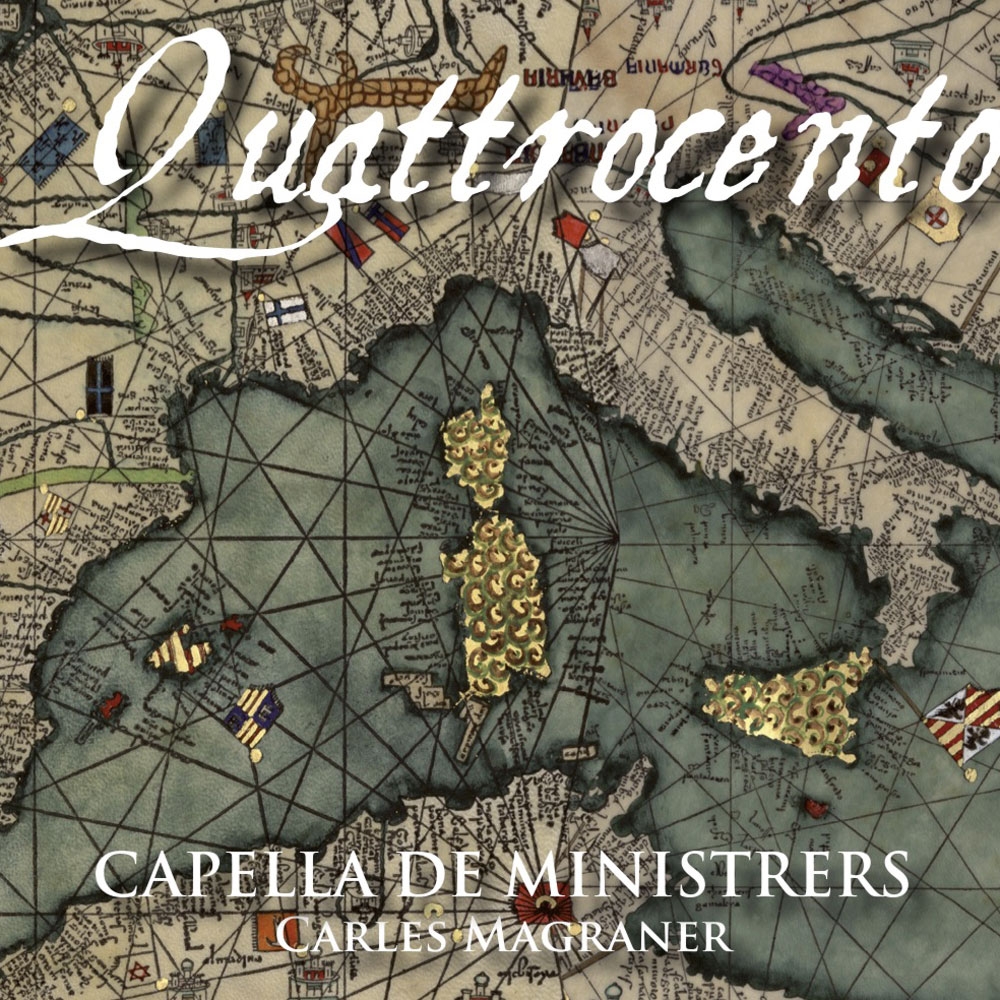
演出團隊:西班牙大使古樂團 Capella de Ministers x 微光古樂集
時間:3/21 (六)19:30
地點:臺北國家演奏廳(臺北市中正區中山南路21-1號)
音樂會簡介:
1400,一場回到人文主義的黃金盛世-文藝復興與大航海時代的音樂盛宴!
這場《微光古樂集古樂節》的三部曲開幕式,將會把音樂廳打造成一做一日的「大航海時代聲音博物館」。
義大利文"Quattrocento“指的是 1400 年代,這是歐洲藝術與科學發展最鼎盛的時期之一,橫跨整個十五世紀,被譽為文藝復興的搖籃。當時,許多影響深遠的藝文界大師相繼誕生,例如畫家達文西、米開朗基羅、杜勒,作家塞萬提斯,以及宗教改革者-馬丁·路德。此外,古騰堡也在此時整合前人技術,發明了鉛字活字印刷術,極大地促進了知識與文化的傳播。
除了藝文盛世之外,航海家如哥倫布、麥哲倫、達伽馬等人率領船艦航向遠洋,探索歐洲以大陸以外的未知國度,讓十五世紀的歐洲正式邁向大航海時代,這是一個藝文、科技、地理與天文觀大爆發的年代,徹底地改變了歐洲乃至世界的歷史進程。
在當時分裂為多個城邦的義大利,其藝術、舞蹈與音樂在成為統治者彰顯權力與文化影響力的重要手段。
而位於義大利南方、由西班牙統治的拿坡里亞拉岡宮廷,匯聚了來自伊比利半島與法蘭德斯的優秀音樂家與理論家們,如奧里奧拉(Oriola)與約翰內斯・廷克托里斯(Johannes Tinctoris),形成一個跨地域的人文文化中心。
而同一時期,文藝復興宮廷舞蹈與戲劇復興蓬勃發展。皮雅千察 (Domenico da Piacenza)與科納札諾(Antonio Cornazano)撰寫了人類史上所知的第一個文藝復興舞蹈文獻,建立了結合人文主義與新柏拉圖思想的舞蹈觀念,其樂譜與舞步至今仍保存完整。
此外,這一時期也是「古希臘羅馬戲劇復興」的高峰,代表人物如桑納扎羅 (Sannazaro) 和卡里特奧 (Cariteo) 等人,所以在宮廷文化中,王子與朝臣不僅是戲劇與喜劇的演員,甚至也擔任音樂家或舞者。因此,十五世紀的義大利宮廷,特別是亞拉岡宮廷,見證了西方人文主義文化蓬勃發展的盛況,成為歐洲藝文交流與創新的熔爐。
本場音樂會選自蒙特卡西諾歌本(Cancionero de Montecassino)、拿坡里亞拉岡宮廷音樂,以及 15 世紀舞蹈手稿中的多首文藝復興舞曲,呈現大航海時代正式啟航之前,歐洲地中海國家的動人古樂,讓我們得以重溯當時的藝術風華。
適逢 1626–2026 年西班牙來台 400 週年,微光古樂集特別策劃「微光國際古樂節」系列演出。
在本場音樂會中,微光古樂集以「中世紀和早期文藝復興古樂器」攜手與成立 38 年、錄製無數張得獎專輯,並專注於復興西班牙歷史音樂的世界級古樂團-Capella de Ministrers(西班牙大使古樂團)運用文藝復興時期的古樂器與演奏技法,跨國共演大航海時代的輝煌古樂。
本次音樂會亦將成為臺西首度合作的古樂盛宴,為四百年前歷史與文化交流寫下嶄新的一頁。
About the Program
The fifteenth century (Quattrocento) marked a turning point in European history, as art, science, and humanist thought flourished alongside radical changes in geography and worldview. Figures such as Leonardo da Vinci, Michelangelo, Dürer, Cervantes, and Martin Luther shaped a new intellectual landscape, while Gutenberg’s movable-type printing transformed the circulation of knowledge. At the same time, voyages led by Columbus, Vasco da Gama, and Magellan ushered Europe into the Age of Maritime Exploration, redefining the relationship between culture, power, and the world beyond the continent.
In politically fragmented Italy, courtly art, dance, and music became key instruments of cultural authority. The Aragonese court of Naples—under Spanish rule—emerged as a major hub where leading musicians, theorists, and humanists from the Iberian Peninsula and the Franco-Flemish world converged. It was also a center for the development of Renaissance court dance, where early dance treatises by Domenico da Piacenza and Antonio Cornazano articulated a humanist vision of movement as an expression of spiritual and intellectual order.
This concert presents Renaissance dance music from the Monte Cassino sources and the Aragonese court of Naples, alongside dances preserved in fifteenth-century choreographic treatises. Performed on period instruments, the program is presented by Capella de Ministrers, Spain’s leading ensemble dedicated to the revival of historical Iberian music, in collaboration with Taiwanese musicians—marking a rare cross-cultural early music project that brings the sound world of the Age of Exploration vividly to life
🔗 優惠資訊|加入微光古樂之友,即享古樂節大場節目優惠折扣
微光特別提供「微光古樂之友」專屬優惠,加入「微光古樂之友」LINE 直享八折優惠
《1626 西班牙基隆四百年音樂會
聖薩爾瓦多之響》 音樂會
1626 Keelung Spain 400: Resonances of San Salvador
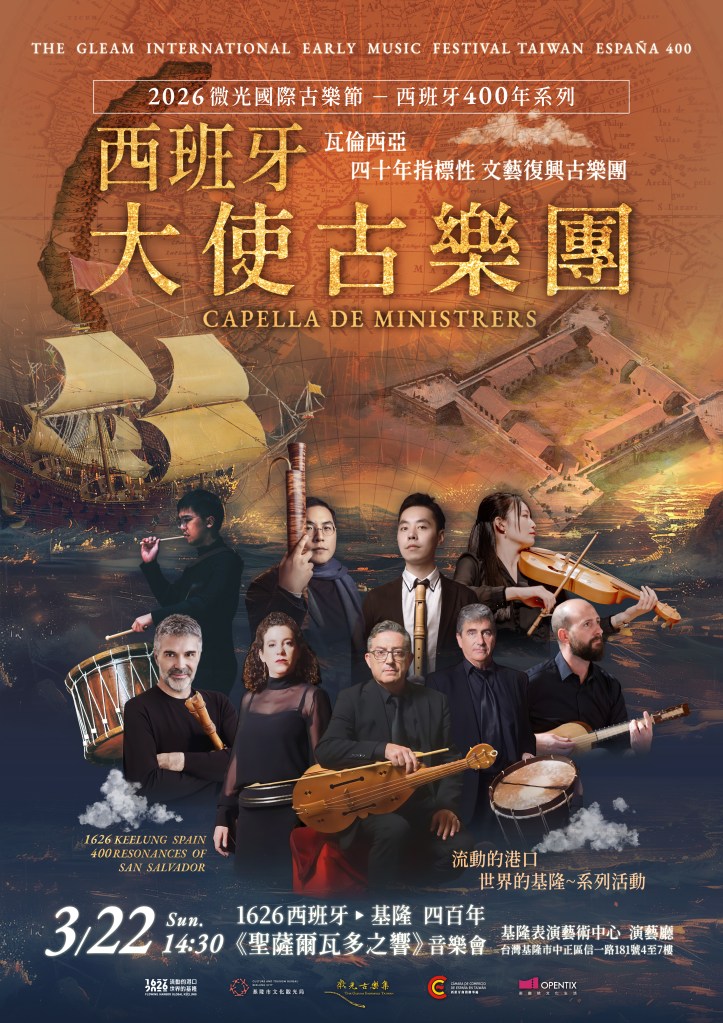
演出團隊:西班牙大使古樂團 Capella de Ministers x 微光古樂集
時間:3/22 (日)14:30
地點:基隆市演藝廳(基隆市中正區信一路181號4至7樓)
*此場為結合國家兩廳院前兩場《西班牙古調》和《1400・大航海序章》音樂會的精選曲目
音樂會簡介:
本節目為「基隆演藝廳特別策劃演出」,亦為《微光國際古樂節:西班牙400年》於發生地-基隆的重要節目。
在基隆 x 西班牙400年之際,西班牙指標性文藝復興古樂團-大使古樂團 (Capella de Ministrers)與微光古樂集,將首次來到基隆,呈現沉睡於這座港都下的400年古樂!
1626 年,西班牙帝國的艦隊航抵福爾摩沙的—雞籠(基隆),並在今日台灣北部「和平島」,今基隆造船廠底下,建立其於亞洲最東端的據點—聖薩爾瓦多城(聖救主城 “Fort San Salvador”)和諸聖教堂(Iglesia de Todos los Santos),開啟臺灣與歐洲和世界接觸的重要歷史時刻。《聖薩爾瓦多之響》將以音樂呈現「西班牙來台四百年」,讓這段跨文化交流不再埋沒誒於和平島的造船廠下。
基隆作為港市,擁有著多層次的歷史記憶與國際連結。本次合作透過 17 世紀歐洲原貌的古樂器編制與歷史考據演奏方式,重現可能曾響起於船艙、堡壘與教堂中的聲音,讓音樂成為連結四百年前與當下的橋樑。
這場音樂會將結合前兩場《西班牙古調》和《1400・大航海序章》音樂會的精選曲目演出,由西班牙大使古樂團與微光古樂集併團呈現!
透過城市政府、台灣與西班牙重要古樂團體的外交合作,使西班牙的古樂在400年後,再次抵達基隆的海港。從15世紀開始,葡萄牙率先突破「世界盡頭」的想像,航海探索帶來的巨額財富,使歐洲各國的視線從曾經的陸路陸路轉向海洋。
新大陸的發現徹底改寫世界秩序,西班牙、荷蘭東印度公司、英國、法國前仆後繼奔向大海,衝擊和更改了舊世界曾經的遊戲規則,「大航海時代」與「地理大發現時代」由此展開。
在這個海上霸權的年代,西班牙建立了可與任何國家匹敵的艦隊。而音樂,作為宮廷、軍旅與城市生活的一部分,也隨著船隊與貿易航線遠播各地。
當時其中廣為流傳的流行歌曲〈Spagnoletta 西班牙小調〉,和 15 至 17 世紀文藝復興到早期巴洛克歐洲最具代表性的定旋律—〈La Spagna 西班牙古調〉曲目涵蓋中世紀至早期巴洛克時代,與西班牙旋律相關的絕美古樂,重現曾隨著西班牙艦隊迴盪於大航海時代的傳奇古樂之響。基隆自古作為港市,承載著多層次的歷史記憶與國際連結,但其文化形象長期多聚焦於海港與觀光產業。
此次合作希望重新定位基隆,使其不只是交通節點,更是具有國際視野與深厚歷史脈絡的文化城市。透過邀請西班牙大使古樂團來台,並與微光古樂集聯合演出,我們將以 17 世紀歐洲原貌的古樂器編制與歷史考據演奏方式,重現當年可能響起於船艙、堡壘或教堂中的聲音,讓觀眾透過音樂直接連結四百年前的幽幽時空。
覆蓋於造船廠下的基隆歷史也將被重新喚醒。透過音樂、歷史與外交的交會,希望讓基隆「記得過去、連結當下、向世界發聲」。
這些作品曾迴盪於航向未知的艦隊上,也在歐洲各宮廷中象徵西班牙榮光,見證人類對地理、靈魂與宇宙的探索。
About the Program
This concert is a Keelung Performing Arts Center Special Presentation and a key event of The Gleam International Early Music Festival: Spain 400, returning to the very site where history unfolded.
In the late Renaissance, art, science, and navigation advanced together, ushering in the Age of Maritime Exploration. Music and dance became integral to courtly order and Europe’s expanding vision of the world. Among the most iconic musical symbols of this era is “La Spagna”, a cantus firmus that circulated widely from the fifteenth century through the early Baroque, repeatedly reworked by composers across Europe.
Celebrating its 38th season, Capella de Ministrers, ensemble for historical Iberian music, joins The Gleam Ensemble to present works from the Middle Ages to the early Baroque, centered on La Spagna—music once heard in courts and aboard long-distance voyages.
In 1626, Spanish fleets sailed from Manila to Keelung, establishing Fort San Salvador and marking the first arrival of Western music and religion in Taiwan. La Spagna: The Spanish Voyage traces this journey through sound, allowing the “Spanish melody” to resonate once more in Keelung’s harbor, four centuries later.
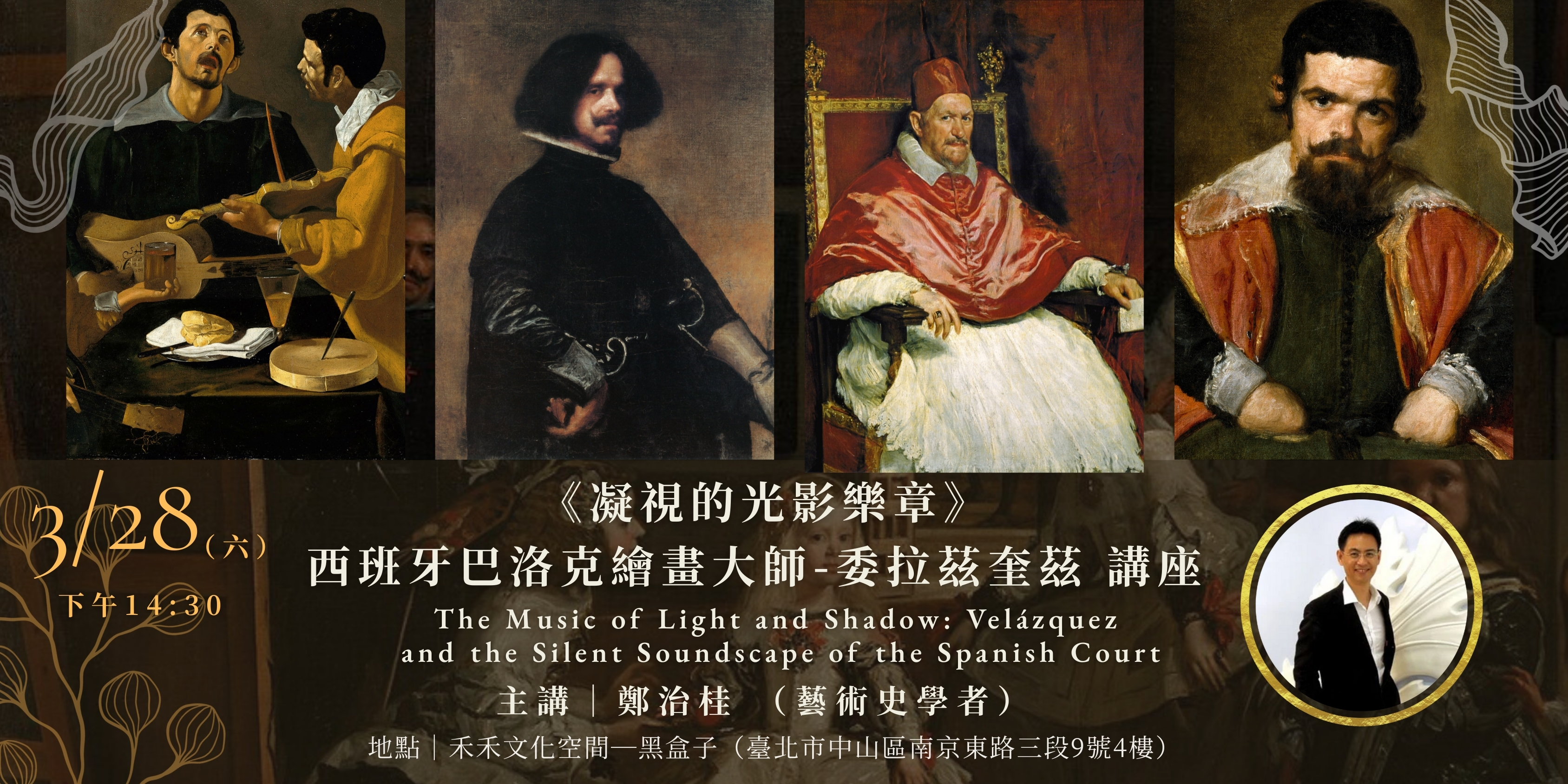
主講:鄭治桂 (藝術史學者)
日期時間:3/28(六)14:30
地點:禾禾文化空間─黑盒子(臺北市中山區南京東路三段9號4樓)
內容:
三月底四月起,微光國際古樂節將從「視覺」與「藝術史」的角度切入大航海時代的西班牙。
委拉茲奎茲 (Diego Velázquez,1599–1660)是十七世紀西班牙黃金時代最重要的巴洛克畫家之一,並擔任菲利普四世的宮廷畫師。他以卓越的光影、透視與寫實描繪技巧,在西方藝術史上具有關鍵性影響,其作品不僅為宮廷肖像,更深刻表現人物的心理與場景的豐富層次,是歐洲繪畫發展的重要轉捩點。
他不僅描繪皇室人物,也以敏銳的觀察描繪普通人、侍從與邊緣角色,使人物彷彿可以走出畫布,而其代表作《宮女》(Las Meninas)更因複雜構圖與觀者與畫中人物之間的視線關係,被視為西方繪畫史上最具研究價值的作品之一。
本場講座邀請藝術史學者─來自鄭治桂主講,將從委拉茲奎茲的多件代表性作品出發,探討他如何運用光線與空間,讓畫面成為一種「正在發生」的狀態。畫中的人物不再只是被觀看的對象,而是與觀者形成微妙關係;視線、姿態與位置,構成一種如時間般流動的結構。
講座將引導觀眾理解,委拉茲奎茲筆下的宮廷人物、侍從、邊緣角色與日常場景,如何共同揭示十七世紀西班牙社會的階級秩序與權力運作。畫面中大量的留白、沉默與曖昧光影,使觀者意識到「看見什麼」與「被允許看見什麼」之間的差距。
並聚焦委拉茲奎茲如何運用光線、空間、姿態與視線,使畫面呈現一種「正在發生」的狀態,突破傳統靜態觀看模式,創造出一種動態的視覺結構。這樣的策略讓畫中的人物既是被觀看的主體,同時又與觀者建立微妙的互動,進一步揭示了 權力、階級與觀看者位置之間的複雜關係。
同時將闡述委拉茲奎茲如何透過不同身份的人物—從宮廷貴族、侍從、侏儒到日常生活場景—揭示十七世紀西班牙社會的階級秩序與權力運作。透過對委拉茲奎茲的重新閱讀,本場講座並不只是介紹一位偉大畫家,而是邀請觀眾思考繪畫如何成為一種思考當時西班牙17世紀世界觀的方式。
About the Program
From late March into April, The Gleam International Early Music Festival turns to the visual arts and art history to explore Spain during the Age of Maritime Exploration.
Diego Velázquez (1599–1660), the leading painter of Spain’s Golden Age and court artist to King Philip IV, transformed Western painting through his mastery of light, space, and realism. His works—most famously Las Meninas—redefined the relationship between image, power, and the viewer.
This lecture, presented by art historian Zhi Gue Zheng, examines Velázquez’s major works to show how light, gaze, and spatial composition create scenes that feel in motion, turning viewing into a dynamic experience. By portraying courtiers, servants, and marginal figures side by side, Velázquez reveals the social hierarchies and power structures of seventeenth-century Spain.
Rather than a biographical survey, the lecture invites audiences to consider painting as a way of understanding the worldview of early modern Spain—where seeing, being seen, and authority were deeply intertwined.
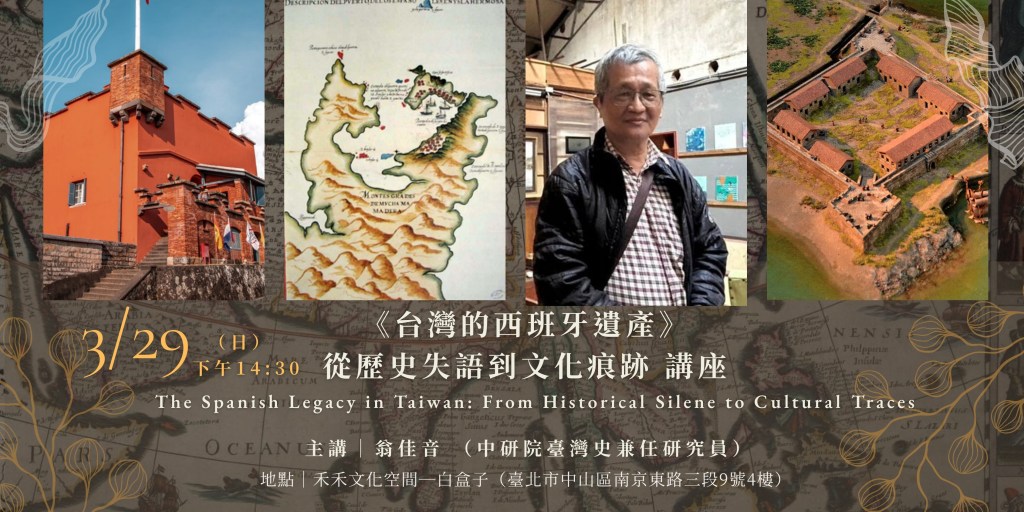
《台灣的西班牙遺產》 從歷史失語到文化痕跡. 翁佳音講座
The Spanish Legacy in Taiwan: From Historical Silence to Cultural Traces
日期時間: 3/29(六)14:30
講者:翁佳音 (臺灣史學者、中央研究院台灣史兼任研究員)
地點:禾禾文化空間─白盒子(臺北市中山區南京東路三段9號4樓)
內容:
在十七世紀的大航海時代,台灣並非單一殖民勢力的舞台,其實更是一個多國勢力短暫交會、彼此競逐的關鍵節點。然而,長久以來,台灣的歷史敘事往往以荷蘭統治為核心主軸,對於同時期存在於北台灣的西班牙政權,則僅留下零碎、模糊甚至邊緣化的描述。
事實上,從 1626 年至 1642 年,西班牙在台灣北部經營達十六年之久。雖然時間不及荷蘭在南台灣的三十餘年,但西班牙人於雞籠(今基隆)建立聖薩爾瓦多城,於淡水建立聖多明哥城,並在宗教傳教、軍事防禦、貿易網絡與港口經營等層面,對台灣的早期歷史產生深遠影響。若以時間比例來看,荷蘭與西班牙在台灣的存在約為 2:1,然而在歷史書寫中,兩者的能見度卻極不對稱。
本場講座由中研院台灣史兼任研究員─翁佳音主講。
翁老師將結合其長年研究台灣史的經驗,深入探討一個關鍵問題:為何西班牙時期在台灣史中幾近失語?這樣的失語,究竟源於史料的不足,還是特定史觀與敘事框架下的選擇性記憶?
講座將進一步指出,當我們習慣以「荷蘭影響」作為理解十七世紀台灣的主要視角時,往往忽略了當時更為複雜的多國殖民交織現實。西班牙的存在不僅體現在軍事與政治層面,其文化痕跡也潛藏於台灣人的生活之中,包括宗教節慶的形式、語言與地名的轉譯、港口與城堡系統的佈局,乃至北台灣與國際海洋世界的連結方式。
透過回到這段幾乎被塵封的歷史,本場講座不只是補寫一段「被忽略的十六年」,更邀請觀眾反思:歷史是如何被選擇、被書寫,又被遺忘的?在重新理解西班牙與台灣之間的關係時,我們也同時重新審視自身如何面對殖民、文化記憶與歷史認同的問題。
About the Program
During the seventeenth-century Age of Maritime Exploration, Taiwan was not the domain of a single colonial power, but a strategic crossroads where multiple empires briefly intersected. Yet historical narratives have long centered on Dutch rule in southern Taiwan, while the Spanish presence in northern Taiwan has remained fragmented and marginal.
From 1626 to 1642, Spain maintained control in northern Taiwan for sixteen years, establishing Fort San Salvador in Keelung and Fort Santo Domingo in Tamsui. Although shorter than the Dutch period, Spanish activities in religion, military defense, trade networks, and port development played a significant role in Taiwan’s early global connections. Despite this, their historical visibility remains disproportionately low.
This lecture is presented by Chia Yin Wong, Adjunct Research Fellow in Taiwanese history at Academia Sinica. Drawing on decades of research, he examines why the Spanish period in Taiwan has been largely “silenced”: is it due to a lack of sources, or the result of selective historical frameworks?
By reexamining this overlooked chapter, the lecture invites audiences to reconsider how history is written and remembered, and to rethink Taiwan’s place within the interconnected colonial and maritime world of the seventeenth century.
Cesare Negri, Capella de Ministrers, Carles Magraner
 微光古樂集
微光古樂集 
你必須登入才能發表留言。